





How Does a Sinking Fund Work?
What is a sinking fund and how does it work?
How does a sinking fund work? You set aside some money regularly for a future expense that you know is coming. Instead of waiting until the expense is due and trying to find the full amount at once, you build the money gradually over time.
For example, if you expect to spend $1,200 in 12 months, you could save $100 each month. Similarly, if you need ₹60,000 in six months, you could set aside ₹10,000 each month.
The basic concept is straightforward: decide what you are saving for, estimate how much you will need, set a deadline, and divide the amount into manageable regular contributions. This can make planned expenses easier to handle without putting sudden pressure on your monthly budget.
Table of Contents
What Is an Example of a Sinking Fund?
A sinking fund can be helpful for expenses you know you’ll have but that might be too large to comfortably pay from one month’s income.
For example, you might pay $1,200 a year for car insurance. Instead of waiting until the renewal date and paying the entire amount, you could save $100 a month. This way, you already have the money ready when the payment is due.
The same concept can work in India. If your annual insurance premium is ₹24,000, you could start saving ₹2,000 every month for that expense.
Common sinking fund goals include:
- Yearly insurance premiums
- Car or vehicle servicing
- School or education costs
- Holiday or festival expenses
- Home repairs
- Replacing a phone, laptop, or appliance
- Planned travel
t’s not just about saving more money. The idea is to give your savings a specific purpose, so a planned expense doesn’t suddenly put pressure on your monthly budget.
Sinking Fund vs. Savings: What’s the Difference?
Savings Both sinking funds and regular savings are methods of saving money, but they tend to have different uses.
Regular savings can be used for financial goals or future needs. Even if you don’t have a particular expense or deadline in mind, you can still put money aside for the future.
A sinking fund is more specific. You set aside money for a particular future expense that you already expect to pay.
For example, you might keep general savings for future plans and have a separate sinking fund for car maintenance, insurance, a vacation, or a new laptop.
Having a specific goal makes it easier to know how much you need to save and when you need to reach your target.
If you are looking for easy ways to build your overall savings, you can also read our guide on Saving Money Habits.
Sinking Fund vs. Emergency Fund
Both sinking funds and regular savings are methods of saving money, but they tend to have different uses.
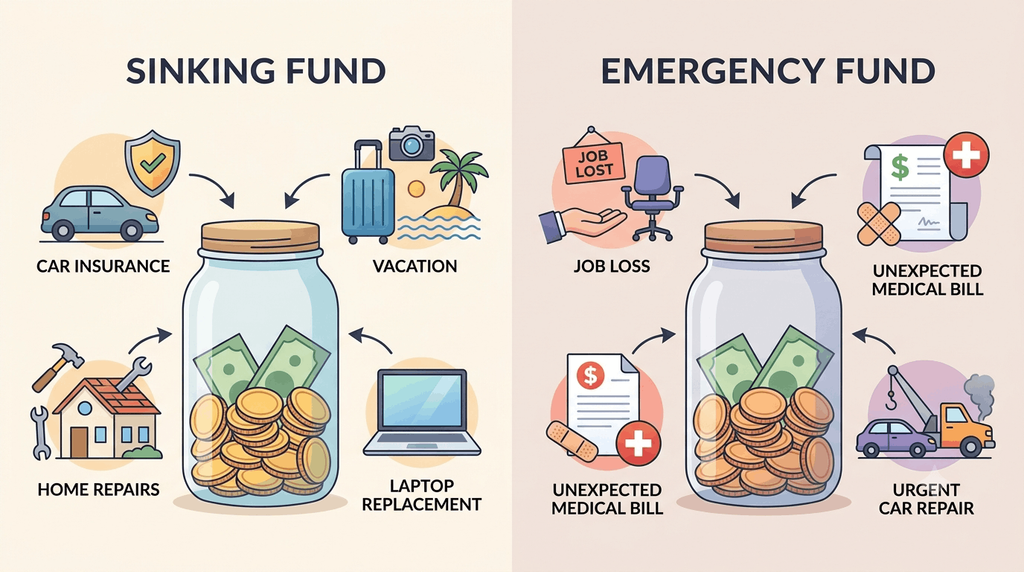
A sinking fund is for expenses that you know are coming. Usually, you know what the cost is and have an idea of when you will need the money. Examples include car maintenance, annual insurance, a planned vacation, or replacing an old appliance.
An emergency fund is for those surprise expenses you can’t easily predict. This can be helpful if you suddenly become unemployed, have an unexpected medical bill, or face an urgent home or car repair.
For instance, if you know your car insurance is up for renewal in six months, you can set up a sinking fund for it. But if your car suddenly needs an expensive repair and you weren’t expecting it, your emergency fund might be better suited.
Check out our guide on How Much Emergency Fund Should I Have? for more on emergency funds and how much you might need.
A sinking fund is designed for planned expenses, while an emergency fund is intended for unexpected financial problems. You can learn more about sinking funds and emergency funds.
What Are Some Good Sinking Fund Categories?
There is no fixed list of sinking funds you need to have. The right categories depend on your expenses, lifestyle, and financial goals.
Some common sinking fund categories include:
- Insurance: Set aside money for annual or semi-annual premiums.
- Car expenses: Save for servicing, registration, tires, or other planned maintenance.
- Home repairs: Build a fund for repairs or maintenance that you expect to handle in the future.
- Travel: Save gradually for a planned vacation or trip.
- Education: Set money aside for school fees, courses, or other education expenses.
- Gifts and celebrations: Plan ahead for birthdays, weddings, holidays, or festivals.
- Technology: Save for replacing a phone, laptop, or other important device.
- Annual bills: Prepare for subscriptions, memberships, or other bills that come due once or twice a year.
You don’t need a separate sinking fund for every expense. Start with the expenses that are larger, predictable, and likely to put pressure on your monthly budget if you have to pay for them all at once.
How Much Should You Save in a Sinking Fund?
The amount you need to save depends on the expense and how much time you have before you need to pay for it.
A simple way to calculate your monthly contribution is:
Amount you need ÷ Number of months until the expense = Monthly savings
For example, if you expect a $1,200 expense in 12 months:
$1,200 ÷ 12 = $100 per month
If you need ₹60,000 in six months:
₹60,000 ÷ 6 = ₹10,000 per month
If the monthly amount feels too high, you may need to start earlier, reduce the expected expense, or adjust the goal. The main idea is to make the amount manageable enough that you can contribute regularly without putting too much pressure on your monthly budget.
A sinking fund can be helpful for expenses you know you’ll have but that might be too large to comfortably pay from one month’s income. You can also see how sinking funds work for different planned expenses in this guide from Discover.
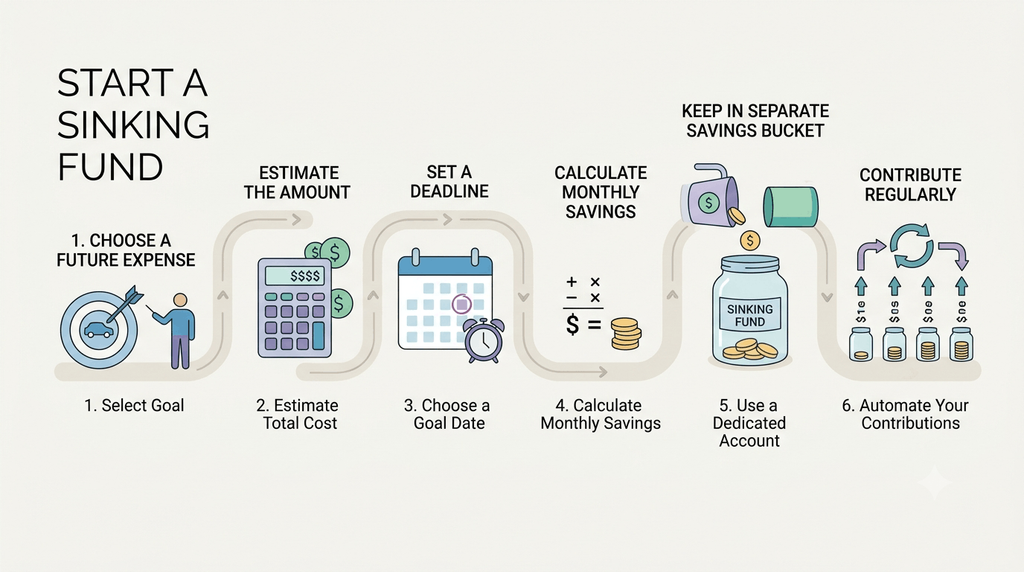
How Do You Start a Sinking Fund?
You don’t need to make a sinking fund complicated to begin. You can start with an expense that you know is coming up.
Choose the expense: Pick an upcoming expense, like insurance, car maintenance, travel, or a new laptop.
Estimate the amount: Make an approximate estimate of how much the expense will cost.
Set a deadline: Pick a time when you think you will need the money.
Calculate your contribution: Divide the amount you need by the number of months you have left.
Keep it separate: A separate savings account or savings bucket can help you keep track of how much you’ve set aside.
Contribute regularly: Add money to the fund every month or whenever you receive income.
You don’t need to start with several sinking funds at once. Starting with one predictable expense can make the habit easier to manage.
Where Should You Keep a Sinking Fund?
You can keep a sinking fund separate from your everyday spending money and in a safe place where the money is easy to access when you need it.
Many people do well with a separate savings account or savings bucket. It also allows you to see how much you have saved for a particular goal by keeping the money separate.
The right choice may depend on when you need the money, how quickly you might need access to it, and what type of expense you are saving for.
If you have multiple sinking funds, you can either use separate accounts or keep them all in the same account and track each goal separately. The important thing is not to mix the money with your regular spending if that makes it easier to spend it accidentally.
What Are the Disadvantages of a Sinking Fund?
While sinking funds can help make planned expenses easier to handle, they’re not ideal for every situation.
One potential downside is that it can be confusing to keep up with too many sinking funds. If you create a fund for every small expense, it may be hard to keep track of all your goals.
Another problem is that you have to contribute regularly. If you go months without contributing, you might not have enough money when the bill is due.
Also, with a sinking fund, you may feel that your budget is more limited because some of your money is already allocated for certain expenses.
Finally, an emergency fund should not be replaced with a sinking fund. A sinking fund is for expenses you know are coming, while an emergency fund is for unexpected financial problems.
Sinking Fund – Good or Bad?
A sinking fund can be a good way to plan for costs you know are coming. It may help you spread a large expense over a number of months rather than paying the full amount at once.
But this may not be the best approach for everyone. Having too many sinking funds can make them difficult to manage. You also have to contribute regularly so that you have the money when you need it.
The trick is to use a sinking fund for specific, predictable expenses while keeping your general savings and emergency fund goals in mind.
Frequently Asked Questions About Sinking Funds
What Is a Sinking Fund?
A sinking fund is simply money you save over time to pay for a known future expense. It allows you to plan for a cost instead of having to pay the whole amount at once.
How Much Should You Have in a Sinking Fund?
There is no fixed amount that everyone needs to have. It depends on what the expense is expected to cost and how much time you have before you need to pay for it. To work out a regular contribution, you can divide the expected expense by the number of months available.
Is Saving the Same as a Sinking Fund?
Not quite. General savings can be used for different financial goals or future needs, while a sinking fund is typically reserved for a specific planned expense.
Is a Sinking Fund the Same as an Emergency Fund?
No. A sinking fund is for expected expenses, while an emergency fund is for unexpected financial problems. Both can help you prepare for different types of expenses.
Can I Have More Than One Sinking Fund?
Yes. You can set up different sinking funds for things like insurance, car maintenance, travel, education, or home repairs. But having too many can make your money harder to manage.